Framework for priority actions

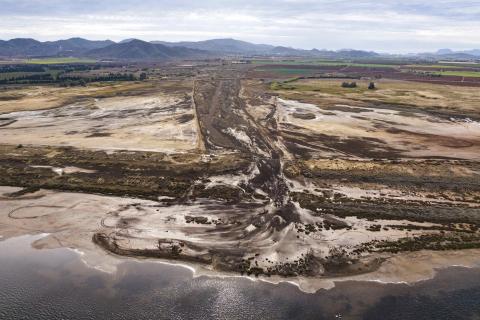
The objective of the Mar Menor Priority Action Framework (MAPMM) is to achieve a series of operational objectives in response to the critical state of the lagoon. Within this context of protecting the delicate ecosystem of the Mar Menor, a series of priority actions have been implemented to address the root causes of multifactorial problems, using nature-based solutions (NBS) whenever possible and guided by the best available scientific knowledge.

These actions address key problems such as eutrophication, pollution, and biodiversity loss in the region. First, measures have been put in place to reduce the release of nutrients and chemicals, including restricting agricultural fertilizers and improving urban waste management.

In addition, wetland and aquatic habitat restoration projects have been undertaken to promote the natural regeneration of flora and fauna. Comprehensive monitoring programs are being carried out to continuously assess the health of the ecosystem and take corrective measures when necessary. Public awareness and environmental education are also key components, engaging the local community in the protection and conservation of the Mar Menor.

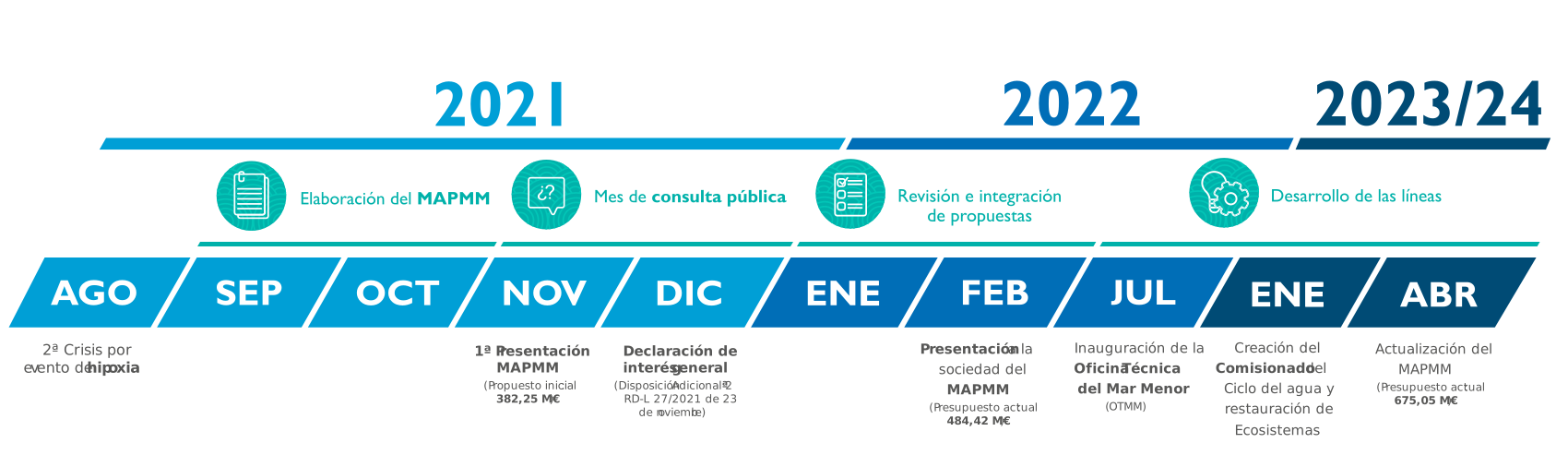
After two years of implementation, the work carried out by the MAPMM has generated extensive experience and invaluable learning. Based on this learning and ongoing monitoring, this document was updated in April 2024 to further address the root causes of the Mar Menor problem and continue contributing to the recovery of its natural dynamics and the watershed.

The updated MAPMM has recorded a budget increase of 675.05 million euros, with an implementation horizon of 2027.

Among the new planned actions are the reinforcement of the restoration of the Sierra Minera mountain range; the reforestation and environmental restoration of the upper and middle basins of Campo de Cartagena; a new call for grants to adapt municipal sanitation and stormwater separation networks; and a line of subsidies for the adaptation of the livestock sector, in addition to those already awarded to the agricultural sector.

The Ministry for Ecological Transition and the Demographic Challenge (MITECO) is committed to achieving coherence among its actions to achieve the expected recovery objectives for the Mar Menor, taking into account all the elements that come together in this complex system, addressing solutions to the multiple causes affecting the ecosystem in the most effective manner, and, most notably, involving civil society and all the relevant administrations.

The MAPMM consists of 10 lines, 35 measures, and 72 actions aimed at restoring the lagoon's biological integrity and contributing to reorganizing the socioeconomic uses of its surroundings, making them more compatible with the preservation of natural heritage.

linea de tiempo
01

Management and surveillance of the public hydraulic domain

27,05 M€

The lack of adequate land use planning in the Mar Menor basin and the activities affecting the public hydraulic domain (PHD) and water use, particularly irrigated agriculture (due to its expansion and intensification), intensive livestock farming, and urban development, have had significant impacts on the lagoon by increasing hydrological needs, invading waterways and destroying natural drainage, and causing an excessive increase in polluting discharges.

Furthermore, the area of illegal irrigation initially detected justified this as the MAPMM's first line of action, aimed at restoring legality in water use and the DPH.

  1. Strengthening surveillance and inspection to ensure compliance with current regulations.
  2. Sealing and disconnection of irrigation facilities in areas without rights.
  3. Groundwater mass action program.
  4. Identification of public waterways, mapping of the associated public hydraulic domain, flood zones, and boundary demarcations in priority areas.
  5. Review of wastewater discharge permits and control of livestock farms.

02

Restoration and environmental improvement in the Mar Menor basin

449,5 M€

The main objective of this line is to act at the source to eliminate direct impacts and achieve a buffering or absorbing effect on the impacts and pollution load of the water before it reaches the lagoon, as well as to naturalize the catchment area in areas where it may be available, addressing the causes of the eutrophication state.

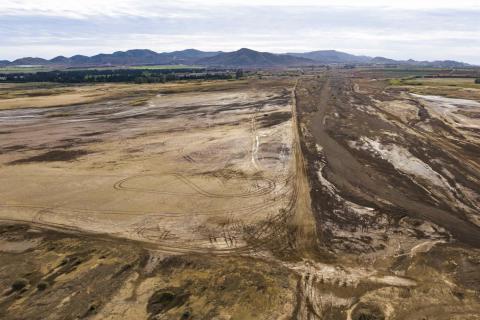
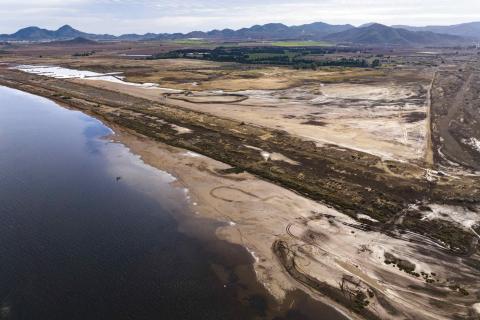
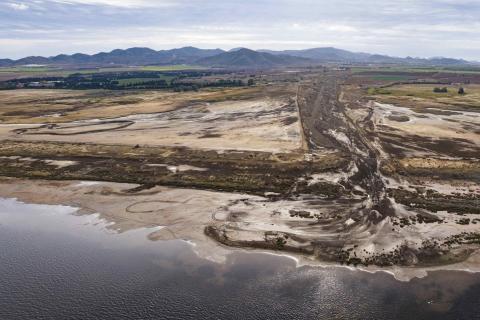
  1. Ecosystem restoration activities along the perimeter of the Mar Menor and the creation of the Green Belt.
  2. Renaturalization and environmental improvement of the ravines, flood management, and creation of green corridors that provide connectivity to the entire drainage network.
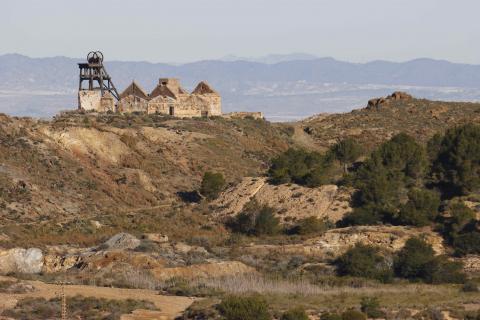
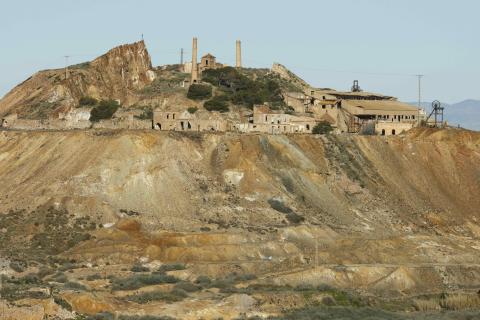
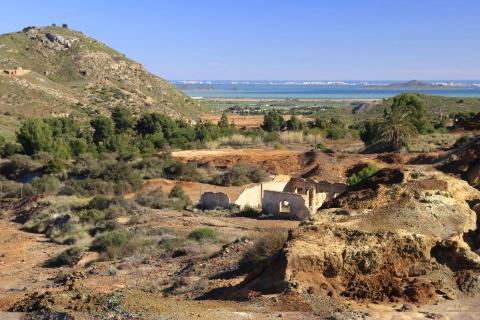
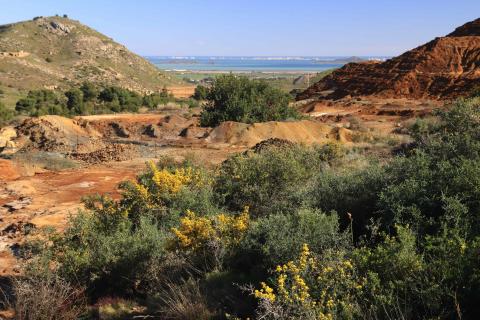
  3. Rehabilitation of abandoned hazardous mining sites and restoration of areas affected by mining in the Mar Menor area of influence.
  4. Hydrological-forestry recovery of the upper basin.
03

Protection of the Mar Menor shore and the Mediterranean coast

37 M€

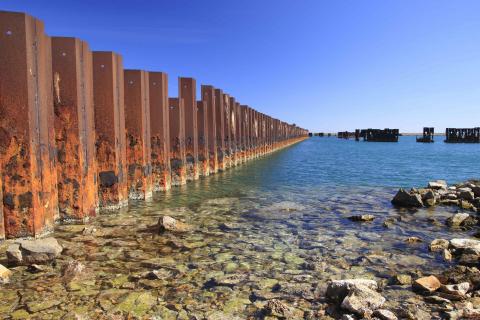
The shores of the Mar Menor and the corresponding Mediterranean coast have undergone morphological transformations and environmental deterioration due to their occupation and concentration of activities and the effects of climate change.

  1. Protection and morphological recovery of the Mar Menor shoreline.
  2. Protection and recovery of the Mediterranean coast.
04

Flood risk management and pollution reduction measures

91,7 M€

The torrential rains typical of the semi-arid climate of the Mar Menor basin create associated risks for the population and infrastructure of coastal towns, mainly due to flooding.

When this phenomenon occurs, sewage systems overflow, revealing the system's inability to retain wastewater. The treatment systems are old and not designed for the current population, resulting in a decline in the quality of the treated water.

Furthermore, while the planned actions for Line 2 have not been implemented and the pollution entering the Albujón ravine is reduced, the aim is to maintain the operation of the pumping and management of the water flows reaching the mouth of this ravine and, if necessary, a complete renovation of this infrastructure will be undertaken.

The planned actions are aimed at establishing security elements that prevent a significant volume of circulating waters with high levels of pollution from entering the Mar Menor and protecting infrastructure.

  1. Complementary flood risk management actions in buildings and infrastructure under municipal jurisdiction.
  2. Renovation of the Albujón Rambla drive.
  3. Complementary sanitation and purification actions in the Mar Menor watershed.
05

Biodiversity conservation

14,4M€

The objective of this initiative is to undertake coordinated actions with all stakeholders involved in the recovery of species linked to the Mar Menor and its catchment basin, developing strategies and actions for the conservation, reintroduction, and reproduction of the most emblematic species that can also be used in restoration projects.

  1. Conservation of terrestrial species.
  2. Conservation of marine species.
  3. Creation of a marine species production center for restoration projects.
06

Support for the transition of productive sectors

37 M€

The current degradation of the Mar Menor and its catchment area makes it impossible to continue with unsustainable production and economic models. Therefore, it is essential to analyze and promote all measures that enable the transition to a more socially and environmentally sustainable economy, especially those related to agricultural activity.

The objectives of these measures aimed at supporting the transition of these sectors could be summarized in the following points:

  • Facilitate the use of opportunities and improve competitiveness generated by the transition of sectors, primarily agricultural sectors.
  • Promote sectoral participation forums.
  • Analyze challenges, opportunities, and threats to design the most appropriate measures to carry out the transition.
  • Evaluate and disseminate the General State Administration's instruments that support sectors (R&D&I support, financing, loans, guarantees, training, etc.).
  • Promote the circular economy as a paradigm of production and consumption that optimizes resources and minimizes waste.

The goal is to promote a transition from the current economic model to one that reduces the ecological footprint by encouraging actions such as recycling and reusing products.

  1. Environmental restoration and improvement in agricultural holdings.
  2. Other cross-cutting aid.
08

Improving knowledge and monitoring

15,8 M€

Another challenge to address in correcting the factors that affect the ecosystem and restoring the Mar Menor coastal lagoon is to improve scientific knowledge about the functioning of all associated ecosystems (watershed and aquifer system) that influence its ecological health.

The objective of this line can be achieved by conducting studies and research that provide a greater understanding of its functioning and dynamics. For this, it is essential to have robust and permanent environmental monitoring systems that allow for continuous and immediate data collection.

To restore the lagoon and maintain the goods and services this ecosystem provides, adaptive (reviewable) management based on independent evaluation of all implemented actions will be necessary.

As conceived, the MAPMM includes the necessary support for each line of action to build on the best possible knowledge.

For this reason, numerous specific collaborations have been promoted with leading research centers and universities.

However, along these specific lines, the following far-reaching measures are being developed to understand the watershed and the lagoon, as well as to model and create a system that facilitates decision-making.

  1. Comprehensive scientific monitoring of the Mar Menor lagoon.
  2. Improving knowledge of groundwater and surface water in the Campo de Cartagena and numerical modeling of the hydrological cycle and pollution.
  3. Modeling biogeochemical cycles and their impact on the biota of the Mar Menor.
  4. Information integration and visualization system, and decision support (DSS, Decision Support System).
  5. Independent monitoring and evaluation system for the progress of the recovery of the socio-ecological system of the Sea
09

Medium-long term planning and vision

0.2 M€

The objective is to undertake a participatory process during the second implementation period of the MAPMM, which is scheduled to run until 2026, to develop an integrated program aimed at fostering the necessary change in trend to consolidate the recovery of the Mar Menor in the medium and long term, with a view to 2050.

This strategy will include a diagnosis on which the objectives to be achieved are based, including the actions initiated within this Framework of Priority Actions and will develop in detail those that need to be implemented over a longer period of time.

As the MAPMM progresses, needs are identified, and project designs are adapted, addressing new issues or strengthening specific priorities.

In this process, it is necessary to understand the social knowledge and perceptions of the people who live in the area, as this will help address a problem as complex and multifactorial as the one facing the Mar Menor.

Therefore, the goal is to foster a social space where agreements and consensus can be reached that encourages the participation and involvement of all in the search for the best possible solutions.

  1. Integrated program for the recovery of the Mar Menor.
  2. Mar Menor 2050.
10

Social participation

1,8 M€

Social participation is key to the recovery of the Mar Menor, and to ensure that all perspectives and opinions are captured in the design and implementation of MAPMM projects, ongoing dialogue will be maintained with civil society organizations representing the Mar Menor and its surrounding area.

Since the Mar Menor Technical Office was launched at the end of July 2022, two aspects of this measure have been promoted: facilitating information on the development and evolution of the MAPMM and creating channels for participation among various stakeholders in society.

Several communication tools are used: on the one hand, the MITECO website opens a specific space dedicated to the Framework of Priority Actions to recover the Mar Menor, where updated information is collected on the work programs, progress in their implementation, maps of the areas of action, and other relevant information for monitoring. This information will be expanded to incorporate information derived from the updated Framework of Actions.

In addition, direct contact with all individuals and entities is facilitated through a mailbox with a dedicated email address: bznoficinamarmenor@miteco.es

Social media is essential for promoting information and participation, so channels will be kept open permanently on those deemed most effective in reaching society.

  1. Public information and social participation.
  2. MAPMM Coordination.